


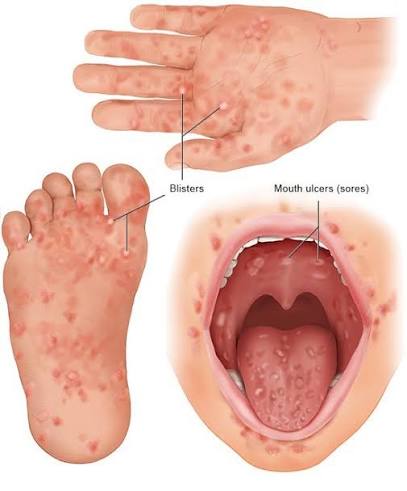
 Hand, foot, and mouth disease (HFMD) is a common, highly contagious viral illness primarily affecting young children, though it can occur at any age. It causes fever, painful mouth sores, and a blister-like rash on the hands, feet, and buttocks.
Symptoms
Symptoms typically progress through a few stages, usually starting within 3 to 5 days of exposure to the virus:
-
- Early signs: Low fever, sore throat, fatigue, and loss of appetite.
- Mouth sores: Small, painful red spots that turn into ulcers on the tongue, gums, and inner cheeks.
- Skin rash: Non-itchy, blister-like bumps on the palms of the hands and the soles of the feet. They can also appear on the buttocks and genitals.
Causes & Transmission
HFMD is caused by viruses in the Enterovirus family (most commonly the Coxsackievirus). It spreads easily in environments like daycares and schools through:
-
- Direct contact with fluid from blisters or saliva.
- Respiratory droplets from coughing or sneezing.
- The fecal-oral route (unwashed hands and contaminated surfaces).
Treatment & Home Care
There is no specific cure or vaccine for HFMD; treatment focuses on managing symptoms and keeping the infected person comfortable:
-
- Fever and pain management: Over-the-counter medications like acetaminophen (Tylenol) or ibuprofen (Motrin/Advil) can be used.
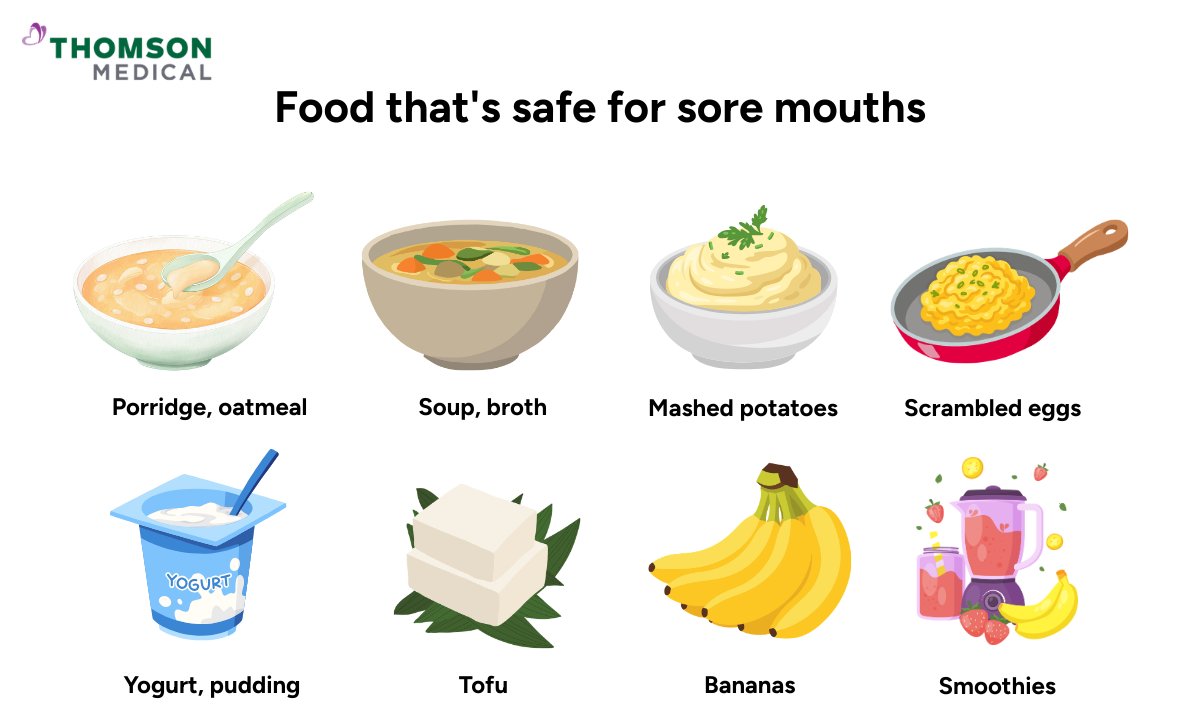
- Preventing dehydration: Encourage drinking plenty of fluids. Cold liquids and soft foods (yogurt, smoothies) are usually preferred as they soothe the throat and mouth.
- Mouth sores: Topical oral anesthetics or numbing gels can be used, but always check with a healthcare provider or pharmacist regarding appropriate age restrictions.
When to See a Doctor
While HFMD rarely causes long-term issues, medical attention should be sought immediately if:
- The infected individual is too dehydrated to drink liquids.
- Symptoms worsen
- There is a very high fever, extreme lethargy, confusion, or seizures.